
What Is Lammas? Meaning, History & Modern Celebration Ideas
There comes a moment in late summer when the garden begins to feel different.
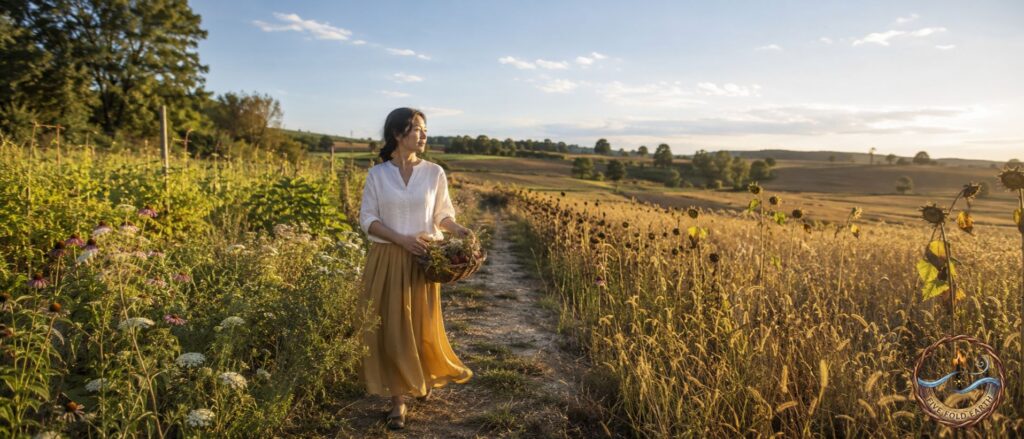
Tomatoes hang heavier on their vines. Sunflowers bow beneath the weight of forming seeds. Grasses that were bright green only weeks ago fade into shades of wheat, honey and warm straw.
The season is still generous with light, yet something has shifted. The air carries the first quiet suggestion that summer will not last forever.
This is the landscape of Lammas, a traditional first-harvest celebration observed around the beginning of August in the Northern Hemisphere.
Lammas invites us to notice what has ripened.
Traditionally, that meant grain, bread, berries and the first foods gathered from the fields. In modern life, the harvest may also be a garden beginning to produce, a creative project taking shape, a relationship deepening or a personal change that required months of patient care.
For some people, Lammas is a religious or Pagan observance. For others, it is a meaningful point on the seasonal calendar, a time to appreciate the land and reflect on the relationship between effort and reward.
You do not need a formal belief system to recognize it.
You may meet Lammas while kneading bread, gathering herbs, visiting a farmers market or sitting outside as evening light settles across the trees.
At its heart, the season asks a very human question:
What has grown because you chose to care for it?
Lammas is one of the seasonal festivals included in the modern Wheel of the Year. It forms a bridge between the summer solstice and the autumn equinox, between summer’s fullness and the harvest season ahead.
For readers beginning to explore this wider cycle, our guide to living in rhythm with the seasons shows how each turning point reflects changes in both the natural world and our inner lives.
What Is Lammas? A Simple Answer
Lammas is a first-harvest celebration traditionally observed on or around August 1 in the Northern Hemisphere. It is associated with the beginning of the grain harvest, bread made from newly gathered wheat and gratitude for the food produced by the land.
Within the modern Wheel of the Year, Lammas is often described as the first of three harvest festivals. It arrives while much of the growing season is still unfolding.
Some crops are ready. Others are still ripening. The fields may look abundant, but the full harvest is not yet certain.
That gives Lammas a deeper meaning than celebration alone. It honors gratitude and accomplishment while leaving room for patience, uncertainty and the work still ahead.
Lammas at a Glance
- Traditional date: August 1 in the Northern Hemisphere
- Seasonal position: Between the summer solstice and autumn equinox
- Main theme: The beginning of the harvest
- Traditional focus: Grain, bread and first fruits
- Related festival: Lughnasadh, also written Lughnasa or Lúnasa
- Modern meaning: Gratitude, growth, sharing and seasonal awareness
Modern celebrations may include baking bread, preparing a meal with local produce, harvesting herbs, walking through a late-summer landscape or writing about what has begun to bear fruit in your life.
The observance can be as simple as placing a freshly picked tomato beside your evening meal and remembering how many forces helped create it: seed, soil, rain, sunlight, insects, time and human care.
That kind of attention belongs naturally within a nature-centered spiritual life. It does not require elaborate ceremony. It begins with noticing.

Is Lammas the Same as Lughnasadh?
Lammas and Lughnasadh are often used as two names for the same early-August celebration, especially within modern Paganism and contemporary Wheel of the Year calendars.
Historically, however, they developed from different traditions.
What Is Lughnasadh?
Lughnasadh is a Gaelic festival marking the beginning of the harvest season. It was historically observed in Ireland, Scotland and the Isle of Man.
The festival is associated in Irish tradition with Lugh, a figure connected with skill and mastery, and with Tailtiu, his foster mother. Stories describe commemorative games held in her honor after her death from clearing land for agriculture.
Traditional gatherings could include outdoor assemblies, contests, trading, feasting, music, matchmaking and journeys to hills or other prominent places in the landscape.
What Is Lammas?
Lammas has Anglo-Saxon roots and is associated with an Old English term often translated as “loaf-mass.” It referred to bread made from the first grain of the new wheat harvest, sometimes brought to church for blessing in medieval Christian practice.
The loaf made the season’s labor visible. Planting, weather, harvesting, milling, kneading and baking all met in one ordinary form of nourishment.
Why Are the Names Used Together Today?
Both traditions fall near the beginning of August and recognize the arrival of the first harvest. As the modern Wheel of the Year developed, their seasonal themes were often woven together.
Many people now use the names interchangeably or write the celebration as “Lammas/Lughnasadh.” Recognizing their shared place in the seasonal cycle is helpful, but understanding their different roots gives the observance greater depth.
Lammas
An Anglo-Saxon and later Christian first-harvest observance centered on new grain and bread.
Lughnasadh
A Gaelic beginning-of-harvest festival associated with seasonal gatherings, first fruits, contests, fairs and traditions connected with Lugh.
Lammas and Lughnasadh grew from different cultural soils, yet both recognize the moment when summer begins to offer something back.
Readers who want to explore the regional customs and stories in greater detail can continue into our guide to Lughnasadh traditions and harvest folklore.
Where Lammas Falls on the Wheel of the Year
Lammas falls between Litha, the summer solstice, and the autumn equinox.
At Litha, the sun reaches its seasonal height. Days are long, gardens overflow with growth and the landscape appears to be moving toward endless expansion.
By Lammas, that expansion has begun to change form.
Flowers become seed heads. Blossoms become fruit. Green grain turns gold. Energy that once pushed outward gathers into something that can be stored, eaten, shared or planted again.
This makes Lammas a threshold rather than an ending. The season is still unmistakably summer, yet the first signs of autumn begin gathering at its edges.
A Cross-Quarter Seasonal Festival
Lammas is often described as a cross-quarter festival because it sits between a solstice and an equinox.
The traditional date is August 1, although modern celebrants may observe it on the evening before, the nearest weekend, near the astronomical midpoint of the season or when the first meaningful harvest appears in their own region.
For nature spirituality and seasonal living, the local landscape may be more useful than the printed calendar.
A gardener in Texas may be gathering tomatoes and peppers while struggling with intense heat. Someone farther north may be collecting berries and waiting for grain to ripen. Elsewhere, early August may bring rain, drought, wildfire risk or a garden resting between crops.
Rather than asking the land to imitate an old European image of harvest, notice what the season is doing where you live:
- What is ripening now?
- Which flowers have begun making seed?
- What foods are appearing at local markets?
- How has the quality of the light changed?
- What does the land need during this part of the year?
In the Southern Hemisphere, people who follow the seasonal Wheel of the Year commonly place Lammas around February 1, when their own first-harvest season is approaching.
The date may change, but the invitation remains the same: meet the season that is actually present.
This section contains affiliate links

The Histories of Lughnasadh and Lammas
Because Lammas and Lughnasadh are now so frequently paired, their separate histories can become tangled.
Untangling them does not make the celebration less meaningful. It allows us to approach both traditions with greater care.
The Gaelic Roots of Lughnasadh
Lughnasadh was one of the major seasonal festivals of the Gaelic year. It marked the beginning of harvest, when communities watched the fields closely and hoped the work of earlier seasons would provide enough food for the months ahead.
Medieval Irish literature and later folklore connect Lughnasadh with large assemblies where people gathered for games, trade, music, courtship and feasting. Some customs involved climbing hills, gathering bilberries or sharing the first foods of the season.
These gatherings were practical as well as celebratory. They renewed social ties, displayed skill and brought communities together at an important agricultural threshold.
The stories of Lugh and Tailtiu add a mythic layer, but they are best presented as tradition rather than straightforward historical record. Ancient and medieval observances changed over time, and many familiar details come from a mixture of early texts, regional folklore and modern interpretation.

The Anglo-Saxon Roots of Lammas
Lammas developed in a different cultural setting.
Its name comes from an Old English expression meaning “loaf-mass.” By the medieval period, August 1 was associated with bread made from the first wheat of the new harvest.
For farming communities dependent on grain, that first loaf represented more than a meal. It carried relief, nourishment and the hope that the season’s labor would sustain life.
In Christian practice, a loaf from the new crop could be brought to church for blessing. For a modern, non-religious observance, that ceremony does not need to be recreated.
The loaf can instead be understood as a symbol of transformation. Grain must be cut, ground, mixed, kneaded and changed by heat before it becomes bread.
Lammas therefore holds both abundance and change. The harvest is not only about what has grown, but about what must be transformed before it can nourish us.
How the Traditions Met in the Modern Wheel of the Year
The modern Wheel of the Year brings together seasonal festivals from several cultural backgrounds. Over time, Lammas and Lughnasadh became paired as names for the early-August harvest point.
Contemporary celebrations may draw from both bread and grain symbolism and broader Gaelic harvest themes. Baking bread, gathering garden produce, sharing food, honoring personal skills and reflecting on effort are modern ways of meeting the season.
These practices can be meaningful without being described as exact ancient rituals.
Modern traditions do not need an invented history. They need honesty, attention and a genuine relationship with the season unfolding now.
That relationship is where the history begins to speak to modern life.
Affiliate Links – Article Continues Below

The Deeper Meaning of Lammas in Modern Life
The first harvest is not the moment when every basket is full.
It is the moment when the first clear evidence of growth appears. Something has ripened enough to gather. Something that began as a possibility can now be held in the hands.
This is why Lammas still speaks to modern life, even for people who do not grow grain or live near farmland.
We are always tending something.
We tend gardens, homes, friendships, creative ideas, work, bodies and inner lives. We make small choices long before we know whether they will lead anywhere, then one day notice that something has quietly changed.
Lammas offers a pause in which to recognize that change before rushing toward the next task or season.
Recognizing What Has Ripened
A personal harvest rarely arrives with a trumpet blast. It may be visible only to you.
It might look like:
- keeping a promise to yourself
- finishing part of a long project
- growing enough herbs to share
- learning a skill that once felt unfamiliar
- setting a boundary that gives your life more room
- rebuilding trust slowly
- creating a calmer home
- feeling energy return after a difficult season
Modern life often encourages us to move immediately from one goal to the next. Lammas interrupts that momentum. It asks us to acknowledge what has grown before turning it into another expectation.
These harvests do not need to be impressive from the outside. They only need to be real.
Honoring Labor and Rest
Harvest imagery can become overly polished. We picture golden fields, full baskets and tables covered with food. We do not always see the uncertain weather, failed seedlings, repeated effort or long stretches when nothing seemed to be happening.
Lammas asks us to honor the tending as well as the result.
Growth is often formed through ordinary acts of return: watering when no flower has opened, showing up between milestones, trying again after disappointment and resting before exhaustion turns care into depletion.
Nature does not treat rest as a prize awarded after every task is finished. Plants slow during extreme heat. Seeds wait for suitable conditions. Soil needs nourishment and recovery.
Rest may be part of your harvest too.
Perhaps you learned to stop before burnout. Perhaps healing required less visible effort and more stillness. Perhaps stepping away from something made room for what truly needed to grow.
The harvest is not proof that you worked every possible hour. It is evidence that something received enough care, time and space to change.
When the Harvest Is Smaller Than Expected
Not every season unfolds according to plan.
A garden may struggle. A project may stall. A relationship may change. Your energy may have gone toward surviving rather than producing.
This does not place you outside the meaning of Lammas.
A difficult harvest may reveal which conditions were missing, what needed more support, what was never suited to the soil or where an expectation had become too heavy.
Some years, the most valuable thing we grow is discernment.
Not every harvest fills a basket. Some harvests reveal what we are ready to release, change or plant differently next time.
Gratitude does not require forced positivity. Lammas can hold more than one truth at once: something may have grown, something else may have been lost and effort may deserve recognition even when the outcome was uncertain.
Reciprocity: Giving Something Back
No harvest is created by one person alone.
Even the smallest garden depends on soil organisms, pollinators, weather, water and generations of people who saved seed and shared knowledge. Our personal harvests are equally interconnected.
Someone encouraged us. Someone taught a skill. Someone made space for us to rest, begin or try again.
The deeper meaning of Lammas therefore includes reciprocity. It asks not only, “What have I received?” but also, “What can I return?”
That return might mean sharing food, supporting a local grower, feeding the soil with compost, saving seed, offering your skills or protecting habitat for pollinators and wildlife.
This spirit of reciprocity connects naturally with gardening as a practice of attention and relationship.
The garden teaches that receiving and returning belong to the same cycle. We gather food, then feed the compost. We collect seeds, then plant again. We enjoy flowers, then leave some for insects and birds.
Nothing living thrives through taking alone.

Choosing What to Carry Forward
Lammas arrives while summer is still warm, but it carries the knowledge that change has already begun.
The ripe berry must be gathered before it falls. The loaf will be eaten. The flower will become seed. The harvest itself will eventually nourish another beginning.
This does not make abundance less beautiful. It makes it precious.
The first harvest invites us to be present with what is ready now, without clinging to it or rushing past it.
Once we have recognized what has grown, we can ask:
- What deserves continued care?
- What am I ready to share?
- What should be preserved?
- What has completed its purpose?
- What no longer needs my energy?
This is where Lammas becomes more than gratitude. It becomes a practice of conscious transition.
Simple grounding practices rooted in the Earth element can help bring these questions out of the mind and back into the body.
The first harvest asks us to notice what has ripened, honor what sustained it and decide what our lives are ready to give back.

Common Lammas Symbols and What They Represent
The deeper meaning of Lammas becomes tangible through wonderfully ordinary symbols.
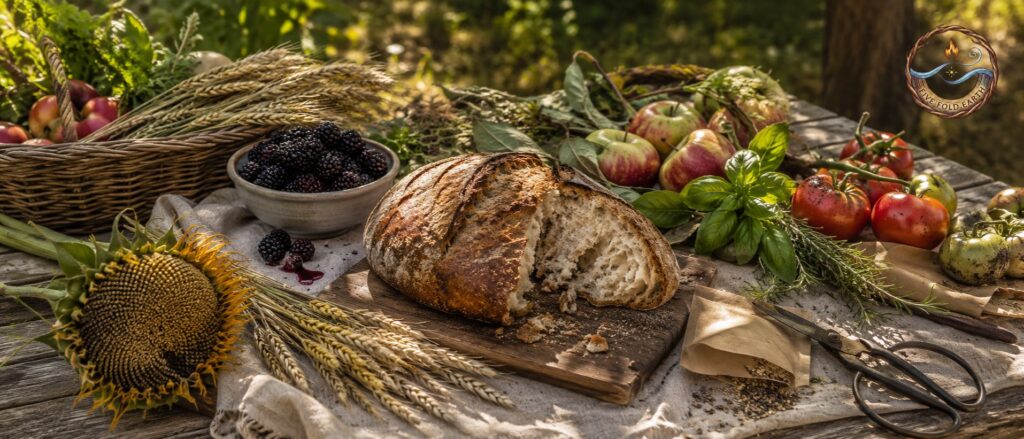
They come from fields, gardens and kitchens: a loaf cooling on the counter, wheat turning gold, a basket near the garden gate or seeds gathered into the palm of a hand.
In nature spirituality, these simple objects become reminders that abundance is never created by one force alone. Soil, weather, time, human care and the wider living world all meet within the harvest.
Grain, Bread and First Fruits
Grain and wheat represent nourishment, patience and the visible results of sustained effort. Bread carries those meanings into the home, transforming seed and labor into something that can be shared.
Berries and other first fruits symbolize ripeness and timing. Their season is brief, reminding us to notice what is ready rather than assuming it will always be available.

Sunflowers, Baskets and Harvest Tools
Sunflowers and other late-summer blooms reflect maturity, warmth and the movement from flower to seed. Their centers become food and future growth, often nourishing birds and wildlife after their brightest petals have faded.
Baskets represent our willingness to receive what the season offers, even when the harvest is modest. Harvest tools symbolize skill, discernment and the responsibility to gather carefully without damaging what is still growing.
Seeds and the Promise of Another Season
Seeds hold the next cycle inside the present one. Saving them is both practical and symbolic: part of today’s abundance is set aside so life can begin again.
Every harvest carries two gifts: something that can nourish us now and something that can begin again.
For a deeper look at Lammas plants, colors, natural objects and seasonal symbolism, continue into our guide to Lammas symbols and their meanings. (coming soon)
Traditional Lammas Foods and First-Harvest Flavors
Many of those symbols naturally lead to the table, but Lammas food does not need to be elaborate.
The heart of a first-harvest meal is choosing ingredients that reflect what the land is offering now. In one place, that may mean warm bread, berries and herbs. Somewhere else, it may mean corn, tomatoes, peppers, beans or summer squash.
Bread, Grain and Seasonal Produce
Bread is the food most closely associated with Lammas because of the festival’s connection with the first grain harvest. A rustic loaf, cornbread, oatcakes, flatbread or even bread from a local bakery can carry the same central message: nourishment is the result of transformation.
Berries, early fruit, fresh herbs and garden vegetables bring the local season to the table. A tomato still warm from the sun or basil gathered just before dinner may feel more connected to Lammas than a complicated dish made from ingredients that are not in season.
A Simple First-Harvest Table
- bread or another grain-based food
- one seasonal fruit or vegetable
- fresh garden herbs
- a locally made or home-prepared dish
- something small to share
The Meaning of Sharing a Meal
A seasonal meal connects growers, cooks, soil, water, pollinators, weather and everyone gathered around the table.
Sharing bread with a neighbor, inviting a friend to lunch or donating extra produce turns gratitude into action. The meal becomes more than a collection of ingredients. It becomes a reminder that nourishment moves through communities.
For complete menus, bread ideas and recipes using first-harvest ingredients, visit our collection of Lammas recipes for the first harvest.

Simple Ways to Celebrate Lammas Today
Food is only one way to meet the season. A meaningful Lammas celebration does not require a formal altar, a large gathering or a long list of supplies.
The season can be honored through ordinary actions performed with more attention.
1. Bake or Share Bread
Bake a favorite loaf, choose something fresh from a local bakery or share another grain-based food. Before eating, pause to consider the long path from seed to table.
2. Visit a Farmers Market
Notice what appears in abundance and ask growers what has recently come into harvest. Choose one local ingredient and build a simple meal around it.
3. Gather What Is Ready
Harvest a few herbs, vegetables or flowers from your garden. A single tomato or handful of basil can be enough to mark the season.
4. Take a Late-Summer Nature Walk
Look for flowers becoming seed, ripening fruit, drying grasses, busy insects and the softer angle of afternoon light. The purpose is not to collect, but to witness the landscape changing form.
5. Create a Seasonal Table
Arrange bread, fruit, herbs, seed heads or flowers in one place. This does not need to be a religious altar. It can simply be a visual reminder that the season is turning.
6. Share Something You Have Grown or Made
Offer produce, herbs, seeds, bread, preserves, knowledge or time. Not every harvest is physical, and generosity does not need to be large to matter.
7. Spend Part of the Day Offline
Cook, garden, walk or eat outside without a screen nearby. Let the scent of crushed herbs, the texture of seed heads and the evening chorus of insects return to the foreground.
For more solo, family, indoor and outdoor ideas, explore our complete collection of approachable Lammas activities.

A Simple Non-Religious Lammas Reflection Practice
After noticing the season outwardly, you may wish to turn that attention inward. This gentle practice can be done at a table, beside a garden, on a porch or beneath a tree. Bring one seasonal object, food or small garden harvest. A journal is helpful, but not required.
A Five-Step First-Harvest Pause
- Notice what is present. Observe its color, weight, fragrance and texture. Consider what allowed it to grow.
- Name what has grown. Reflect on one thing you have tended since winter or spring.
- Recognize what helped. Remember the people, places, rest or circumstances that supported that growth.
- Choose one act of reciprocity. Share food, thank someone, support a grower, save seed or give care back to the land.
- Write one practical intention. Decide what you will protect, share, continue or release as the season turns.
Your intention might be as simple as:
- “I will share what has grown.”
- “I will protect what still needs time.”
- “I will return care where I have received nourishment.”
- “I will make room for rest after effort.”
A seasonal practice becomes meaningful not because it is elaborate, but because it changes how we notice and respond.
For a fuller collection of questions and writing exercises, continue with our Lammas journal prompts for harvest reflection. (Coming Soon)

Celebrating Lammas Through Gardening
The same themes become especially visible in a garden. By late summer, every bed tells a different story. Some plants are producing generously. Others are fading, forming seed or waiting for cooler weather. Celebrating Lammas through gardening means meeting each plant where it is rather than expecting every corner of the garden to look abundant.
Harvest With Attention
Walk through the garden before picking anything. Notice what is fully ripe, what needs another day and what has already passed its best moment. Gather what can be eaten, preserved or shared while protecting the fruit, flowers and leaves still developing. A harvest does not need to fill a basket to be meaningful. A few tomatoes, one pepper or a bundle of fragrant herbs can be enough to mark the season.

Save and Preserve
If seed saving is appropriate for the plant, allow a few healthy flowers, herbs or vegetables to mature fully. Collect the seeds on a dry day and label them with the plant name, variety and date. Seeds create a quiet bridge between growing seasons. The garden planted next year may carry part of this summer within it. You may also preserve a small piece of the current harvest by:
- drying herbs
- freezing berries or chopped herbs
- making refrigerator pickles
- preparing herb butter
- recording favorite varieties in a garden journal
Preservation does not have to become a large project. One small jar can hold the memory of an entire afternoon in the garden.
Leave Part of the Harvest for Wildlife
Not every seed, berry or flower needs to be gathered. Leave selected blooms for bees, butterflies and other pollinators. Allow some seed heads to remain for birds, and return suitable fallen fruit or plant material to the compost. This shifts the meaning of harvest from possession to participation. The garden is feeding more lives than our own. For more ways to care for the living community around your home, explore how to restore small pockets of habitat for wildlife.
Give Something Back to the Soil
After gathering from the garden, return care to the ground. This might mean adding compost, mulching exposed soil, removing diseased material, conserving water or preparing a bed for the next planting season. Healthy soil is not an empty substance that plants merely stand in. It is a living community of organisms, roots, moisture, air and decaying matter. Learning the foundations of caring for living garden soil is one of the most practical expressions of harvest reciprocity.
The garden’s first harvest is not the end of its story. It is where gathering, giving back and beginning again meet in the same handful of soil.

How to Celebrate Lammas Respectfully
Care for the land also shapes how we approach the traditions connected with it. Seasonal traditions often travel far beyond the cultures and landscapes where they began. This can create meaningful opportunities for learning, but it can also flatten distinct histories into one vague idea of an “ancient harvest festival.” Celebrating Lammas respectfully begins with curiosity, honesty and attention to place.
Recognize the Different Histories
Lammas and Lughnasadh are connected in many modern seasonal practices, but they did not begin as identical traditions. Lammas developed from an Anglo-Saxon and later Christian first-grain observance. Lughnasadh arose within Gaelic culture and carried its own mythology, gatherings and regional customs. Modern practices such as gratitude journaling, seasonal tables and nature walks may be inspired by older harvest themes without being exact ancient rituals. That does not make them less meaningful. A new tradition can be sincere when it is described honestly.
Follow the Season Where You Live
Many familiar Lammas images come from northern Europe: ripening grain, bilberries, green hills and cool evenings. Your early August may bring intense heat, drought, monsoon rain, wildfire risk or a garden resting between crops. A nature-based celebration should not require the land to pretend it is somewhere else. Use the foods, flowers, weather and natural changes that belong to your region. If fire is unsafe, watch the sunset or use a solar lantern. If flowers are scarce, notice dry grasses, seed pods or the changing shape of the trees.
Gather Natural Materials With Care
Not everything beautiful needs to be picked. Before collecting flowers, herbs, berries or seed heads, make sure you have permission and that the plant is plentiful enough to share.
- avoid rare or protected plants
- take only what you can use
- leave food for birds and wildlife
- avoid treated roadsides
- choose garden-grown, purchased or naturally fallen materials when possible
Sometimes the gentlest form of gathering is a photograph, sketch or memory.


Make Reciprocity Part of the Celebration
Lammas is not only about admiring signs of abundance. It is also about asking where nourishment came from and what we can return. You might support a local grower, donate food, compost kitchen scraps, conserve water or protect space for pollinators. For a deeper way to weave nature connection into ordinary routines, explore how to rewild your daily life without leaving your real life behind.
Respectful seasonal living is less about borrowing the appearance of an old tradition and more about building an honest relationship with history, place and the living world.
Celebrating Lammas Alone, With a Partner, or as a Family
A respectful celebration can be quiet and private, shared between two people or woven into a family meal. Its meaning does not depend on the size of the gathering.
A Solo Lammas
Drink tea outside, gather a small harvest, prepare a seasonal meal or take a late-summer walk without headphones. Solitude can make room for the quieter messages of the season.
With a Partner
Cook together and share one thing the relationship has grown since spring. Ask what still needs patience and what you would like to carry into autumn.
As a Family
Knead bread, visit a farmers market, wash vegetables or notice pollinators together. Let children experience the season through scent, taste, texture and observation.
With Friends or Community
Share a seasonal dish, exchange produce or seeds, collect food donations or spend time in a community garden.
Keep the celebration spacious enough for real life. If the bread burns, the children lose interest or the garden produces only three small tomatoes, nothing has failed. The season is still present. Two neighbors exchanging herbs over a fence may be participating in the oldest spirit of harvest: abundance moving from one hand to another.

Frequently Asked Questions About Lammas
What is Lammas in simple terms?
Lammas is a traditional first-harvest celebration observed around August 1 in the Northern Hemisphere. It is associated with grain, bread, seasonal food and gratitude for what the land has begun to produce. In modern nature spirituality, it can also be a time to recognize personal growth, share what we have and notice the approach of autumn.
What does the word Lammas mean?
The name Lammas comes from an Old English term commonly translated as “loaf-mass.” It refers to bread made from the first grain of the new wheat harvest. In medieval Christian practice, this loaf could be brought to church for blessing.
Are Lammas and Lughnasadh the same?
The names are often used together within the modern Wheel of the Year, but the traditions have different roots. Lammas developed from an Anglo-Saxon and later Christian bread-harvest observance, while Lughnasadh is a Gaelic beginning-of-harvest festival with its own mythology and community customs.
When is Lammas celebrated?
Lammas is traditionally observed on August 1 in the Northern Hemisphere. Some people begin on the evening of July 31, celebrate on the nearest weekend or follow the first meaningful harvest in their own region. In the Southern Hemisphere, the seasonal equivalent is commonly placed around February 1.
How do you pronounce Lughnasadh?
Pronunciation varies by language, dialect and region. A common English approximation is “LOO-nuh-suh.” You may also see the simplified spelling Lughnasa or the Irish form Lúnasa.
Do you have to be Pagan or Wiccan to celebrate Lammas?
No. Lammas can be approached as a non-religious, nature-centered seasonal tradition through bread baking, gardening, local food, reflection or time outdoors.
Is Lammas the beginning of autumn?
Lammas marks an early movement toward harvest and autumn, but it is not the official beginning of the season. It falls between the summer solstice and autumn equinox, when summer is still present but the landscape has begun to change form.
What is the spiritual meaning of Lammas?
The spiritual meaning of Lammas centers on gratitude, maturation, effort, reciprocity and change. It invites us to recognize what has grown, honor what sustained it, share what we can and accept that every harvest is also part of a larger turning cycle.

The First Harvest Begins With Noticing
By the time Lammas arrives, the landscape is already telling the story. The sunflower’s center is filling with seed. The herb garden is fragrant beneath the afternoon heat. Tomatoes bend their vines toward the ground, and grasses along the roadside have faded from green to gold. Nothing announces the first harvest with a single clear signal. It appears through a thousand small changes. Lammas invites us to become quiet enough to see them. You do not need an elaborate ritual or a perfect basket of produce. You can begin with what is present: a loaf cooling on the counter, a few herbs tied to dry, a peach eaten over the sink or a patch of soil that needs care after giving generously. The harvest may also be something less visible: a project beginning to feel real, a healthier boundary or the return of energy after a difficult season. These moments reveal the relationship between what was planted, what was tended, what was lost and what has become possible. This is part of the wisdom carried through nature’s cycles: what ripens must be noticed, what nourishes us deserves gratitude and what we receive asks for a thoughtful response.
Lammas begins when we pause long enough to recognize what has ripened, honor what sustained it and choose how the harvest will be shared.
Step outside when the light begins to soften. Notice what is forming seed, what is ready to gather and what still needs time. Somewhere between the fading flower and the first full basket, the next season has already begun.
Continue Your Lammas Journey
The first harvest holds many stories. Each topic below is explored more deeply in its own supporting guide, linked within the matching section above:
- 25 Meaningful Lammas Activities for solo celebrations, couples, families and community gatherings
- Lammas Symbols and Their Meanings through grain, bread, berries, flowers, baskets and seeds
- Lammas Recipes and First-Harvest Flavors using bread, grains, herbs and seasonal produce
- Lammas Journal Prompts for gratitude, growth, effort and personal harvest
- Lughnasadh Traditions and Harvest Folklore exploring Gaelic gatherings, stories and first-fruit customs


